with Konstantinos Khabidis on poetry and music. November, 2025
To mark the publication of his poetry collection Ανώτερη όλων το καλοκαίρι, Teodor Currentzis met with Konstantinos Khabidis and shared some thoughts with him. In his talk, he revealed the method of his work and his attitude to the structure of sound and its dismantling; discussed the role of silence in art; the sanctification of the word and the 'burning' of language. The conversation, coming from the depths of his soul, touched upon topics equally related to the realms of poetry and music: tonguetied dreams, frenzied screams, street pedlars from Currentzis's childhood memories, the connection between the creator and his audience, sound as a universal language.
Konstantinos Khabidis: Due to my personal experience, I used to perceive poetry as music. As if it were a perpetual attempt of sounds to create a picture. That is how I felt about this book. It contains phrases and words that repeat and transform, like a musical theme that develops through modulations and variations.
Teodor Currentzis: Music is always looking for new ways to sprout in poetic speech. Often, at the edge of consciousness, in the cracks between the keys, the ‘incomprehensible’ begins to ooze out. Here is one of the methods I use: religious tongue-tie.
Please explain.
The most beautiful and profound lyrics in songs are those that, for one reason or another, are incomprehensible on first listening. Sometimes it happens that you hear a song from your neighbour’s apartment. The distance and the walls make speech indistinct, and you hear the words only approximately, you hear only the shell of the word. You don’t recognize the word, you rather figure it out. You conject it, and most of the time you get it wrong. But still you keep singing along. To survive, an indistinguishable word that has reached from afar receives a short-term form and content from the subconscious. This is the magical tongue-tie of speech, the misperception of meaning in the acoustics of the inner space.
The mystery of lost syllables.
Precisely. These are the best lyrics. The unknown ones. If you read them later and find out what they really are, you’ll be disappointed. The specificity becomes a barrier to finding the exiled word. Having misheard, you inadvertently discover some deep truth.
Right, but isn't there a rivalry between natural speech and musical speech? Which speech is more important? Do you prefer to listen or understand?
I want the listener or reader to understand as much as I need to put them in a trance. If they start thinking about my production technology and sees the workshop with its gears and cables, they’ll wake up, and then I’ve lost them. Hermetic moods are not just dark wanderings and concealment of information. No. This is the sound of a parallel world, which, in order to echo in our conventional world, needs a hidden but very specific plan, and an invisible ear trumpet buried in the ground. This allows the verse floating in the air to be grounded inside us: it is a mystical foundation that is always hidden under the conjurer’s tablecloth.
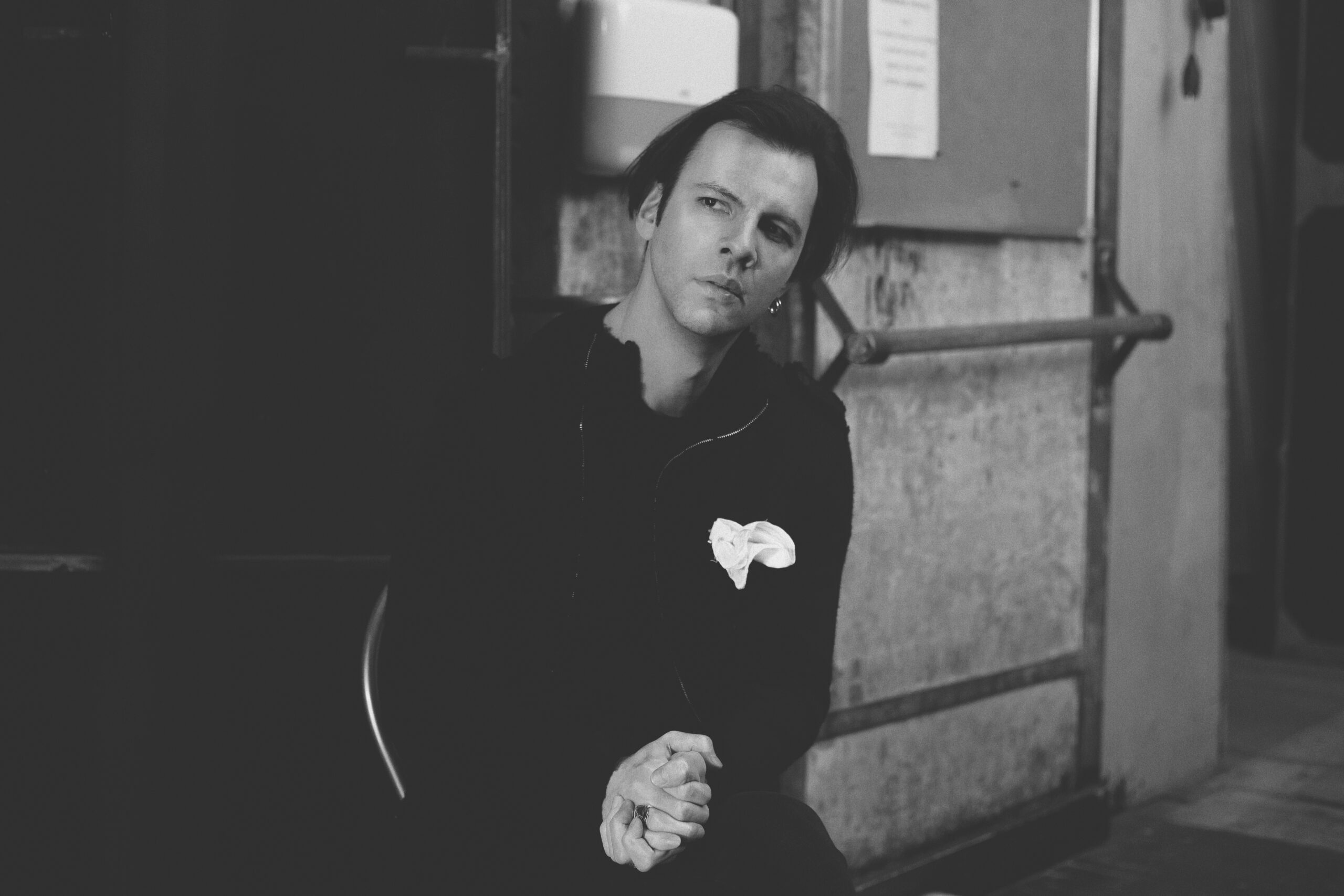
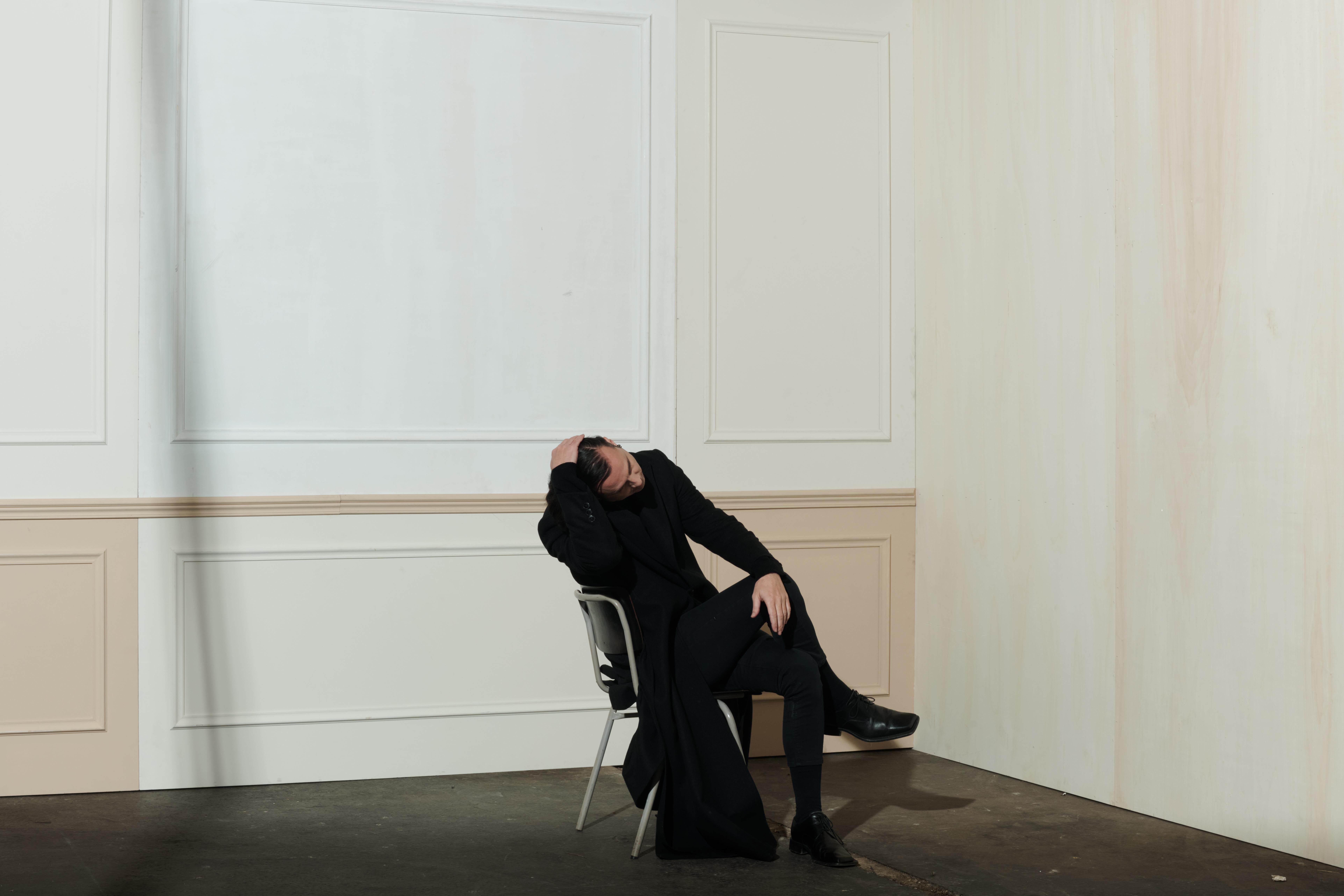
Photo by Nadia Romanova
What connects music and poetry?
Dreams. And their disintegration.
I've recently read a review of a recording of Mahler's Symphony No. 5 interpreted by Sir Simon Rattle, and among other things it said: 'The maestro showed us how the Symphony No. 5 is organized.' In other words, we saw the cables, we saw the gears, but not the Symphony No. 5. So I understand what you mean. You prefer magic over a technical project. And what happens when music has to serve as an accompaniment to poetry?
Music is powerless against great poetry, it surrenders before it, because this poetry already has its own music written by someone else. But a simple ‘weak’ poem — it soars to unprecedented heights with the help of music! When I want to write music with words, I almost always write the music first and only then compose the words. Why so? Because music doesn’t take in anything else, no extraneous sound. It only needs an impulse to breathe a great hidden meaning into an ordinary sinful word. This is the omnipotence of music. It sanctifies speech.
This is, of course, a subjective opinion, but personally I always prefer music to be dominant, autonomous, with no poetic accompaniment. How important are sound and meaning in poetry?
The power of a word dies with its noise. In poetry, we have to deal with a succession of small deaths. Silence is a mysterious glow that follows the tragic death of the word. I see it as the light of resurrection. So, what is the key to break the silence? What is the plume of that glow like? What are the burns like? What is the healing like? It’s so important how you apply the whitewash of silence to the blackness of the paper. How you capture the silence.
Does silence allow interpretation?
When we read in silence, ‘to ourselves’, this is a University of subconscious noises. One way to perceive music without sound is to listen to the vibration of the soul within yourself, to the resonance created by the word. You interpret silence by moving from your daily communication with the word to another, more personal and fragile perception of its world. A word in a poem means something completely different from what it means in everyday speech. Silence is a promise.
The perception and philosophy of language are distorted by their expansion, as in a dream. The strangest things find natural explanations there.
But isn't it easier to convey this strange feeling of déjà-vu in music? In other words, wouldn't it be more convenient to use sound to create this eerie picture, which is inexpressible in language? It is not tied to speech, to terms, to words, to grammar, to vocabulary.
It is tied to physics and to frequencies. I often say that any Mahler symphony in a fragmented form can be found in the noise of a huge traffic jam. If you take all the sounds that sound there, analyze all the noises, this whole giant cluster, you will get the entire range of frequencies required for a symphony. There only will be no timbre colouring. But if, theoretically, we take these sound fragments and put them together, then we can complete Mahler’s Symphony No. 5 like a puzzle. But will this thing be music?
No.
That is the question: what transforms noise into music? What makes sound music? Once, scientists invited me to some anthropological experiments in Salzburg. We were sitting down and were shown how a computer with a neural network would compose more of Chopin’s nocturne. We burst into hysterical laughter, we laughed and couldn’t stop… this computer obviously lacked talent.
All these people who are engaged in artificial intelligence may not have understood one thing: what we call Art in this world is a wound and imperfection of a human being, it is the antibodies and reflexes that they produce in order to survive with all their inner ruptures. It’s an innocent mistake of Love! What would poetry be like in a perfect world? Maybe only praising. This view may seem eschatological, but for three thousand years now we have been living in the end times, so all art and the entire sacred tradition are engaged in negotiations with themselves. Will death have power or not? ..
But isn't there another way? Haydn wrote the symphony 'The Bear' and the symphony 'The Clock': he wrote music for happiness!
Good for him.
I mean, isn't there any other way? Does art require pain?
Friedrich Hölderlin, the author of Hyperion, asked himself before falling into madness, ‘And what are poets for in destitute times?’ — ‘Und wozu Dichter in dürftiger Zeit’? And the stoic Miltos Sachtouris replied, ‘I don’t write poetry, I just stick crosses in graves.’
Right. But that's what the elixir of human success is called, according to Sachtouris— unhappiness.
It’s not unhappiness, it’s humility. Therefore, silence is the highest degree of eloquence, the main guarantee of complicity in Love, the loudest of sounds. Have you ever been in any kind of a vacuum chamber?
No, never.
This is such an audibly sterile space, devoid of the slightest hint of sound, that when you enter it, at first you feel a slight panic, you feel as if you are trapped inside your own self. And when you start to be shocked by the terrible volume of silence, because you haven’t experienced it before, in a few seconds you start to hear a strange sound — the sound of your heart. Then another one—your bloodflow. Is this really silence? It doesn’t exist. Maybe only when we die will we be able to hear silence, but that won’t work either, because then we won’t have feelings. So, silence is a Utopia, which, however, implies the presence of sound and an organ of hearing.
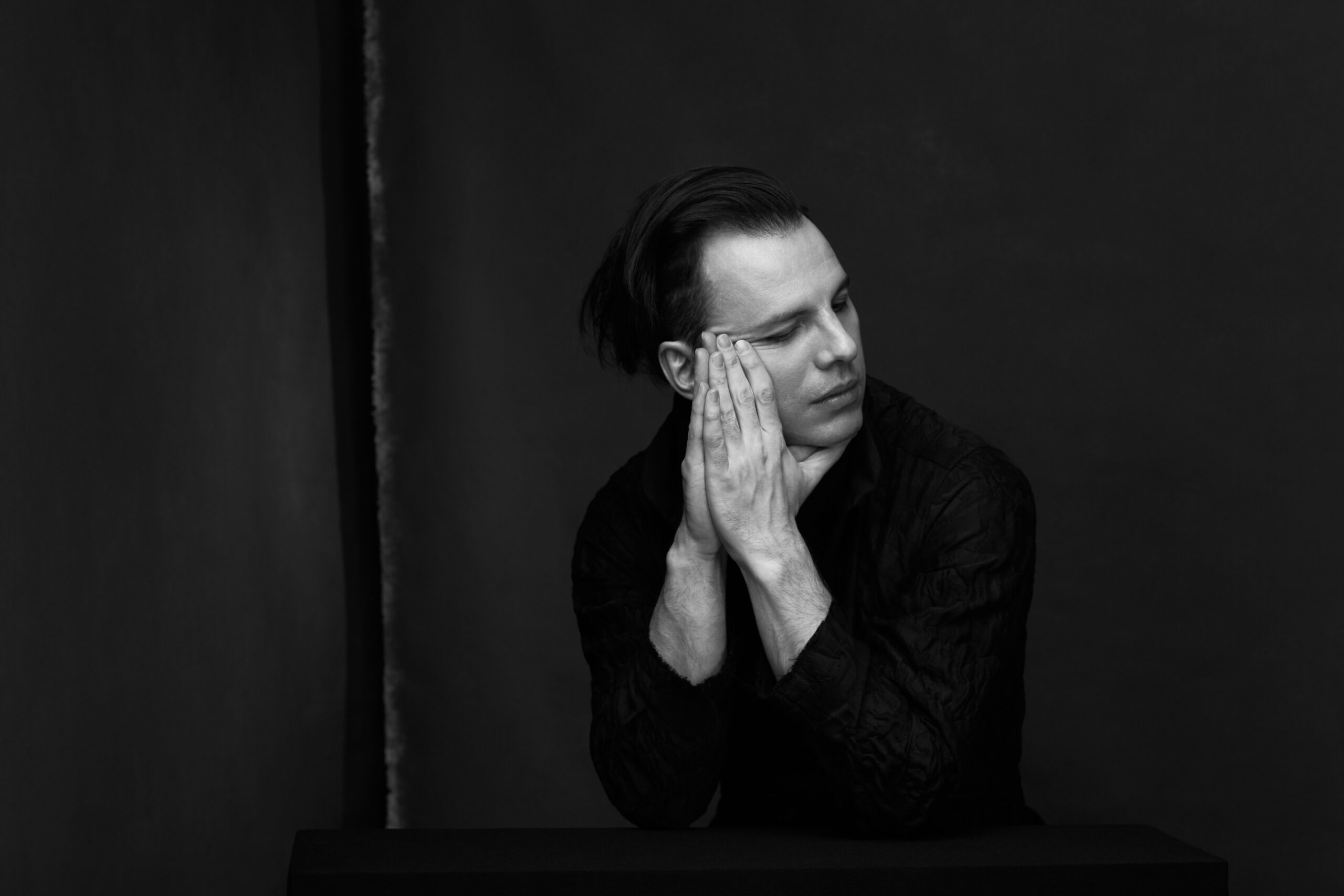
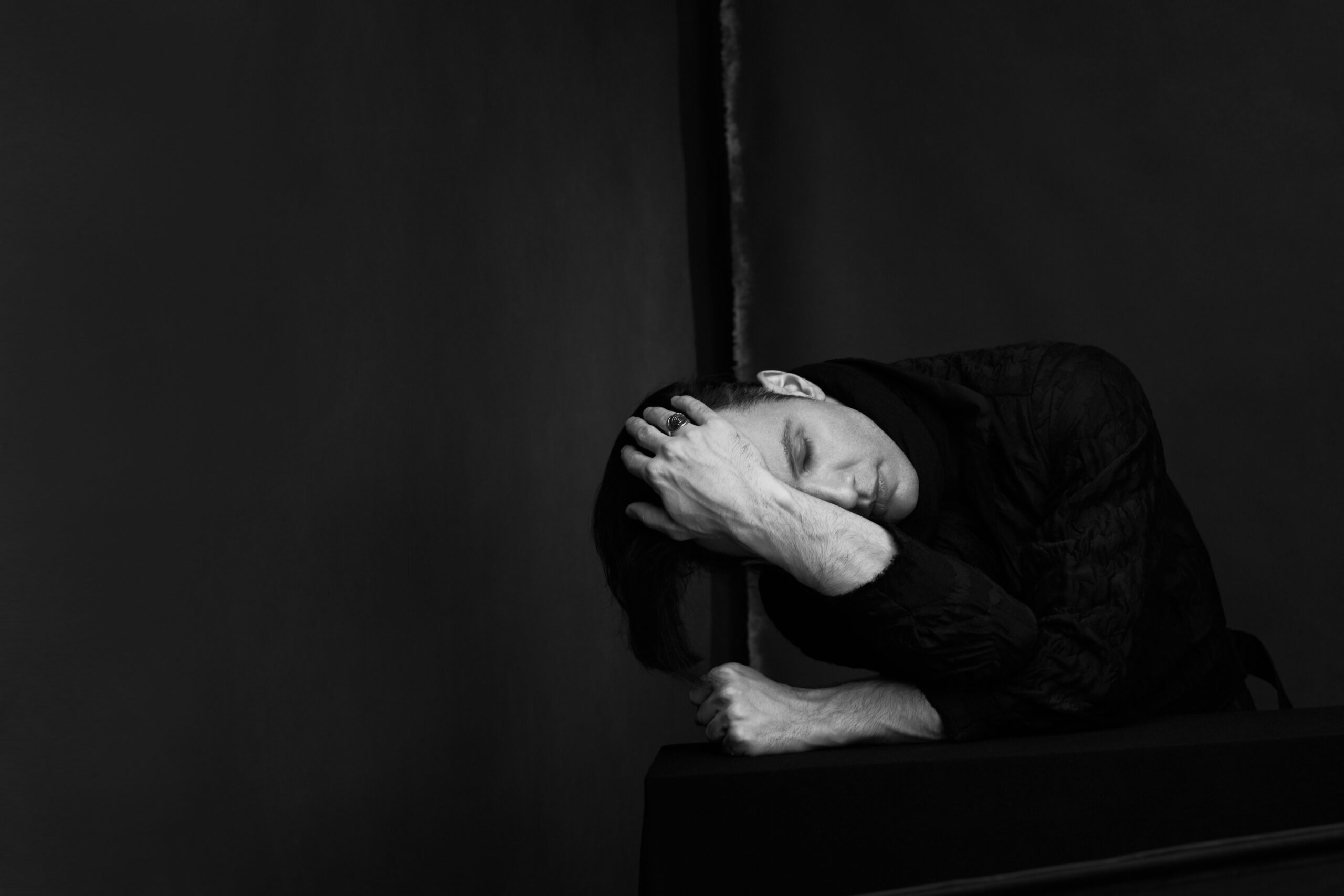
Photo by Amanda Demme
What inspired you to follow this strange method, this 'solitude' in silence?
The hermetic plan is created from fragments of mental silence, which try to complement the picture that appears before the reader’s eyes. Kontakion 2, for example, I originally wrote as a piece of music— on a musical scale, indicating the tempo of performance, pitch, and with a metronome.
It even looks similar to a modern score.
To some extent, yes. Then I thought that few people would be able to read it, so I simplified it. In its current form, each point corresponds to a pause of half a second. The volume of the voice should be barely audible pianissimo, and, of course, it is necessary that this poem be recited aloud, and not read to oneself. That is how it is meant to be. And almost always, when it is read in this way, the frequencies I need are obtained.
This is a kind of reading guide that you created to avoid formalism. I get it. Tell us about the echo, about the sounds that fill your work.
I am forming a collection of old tapes with recordings of the voices of pedlars. They sang short off-pitch songs, like Sprechstimme, as if they had learned some spells from their grandfathers. First they had carts, then cars, and they filled the block with the echo of their voices. At dawn, you were awakened by the distant ‘bugle call’ of this sound. It was impossible to make out what they were saying, but it was clear that they were selling or buying some kind of prayer. In the 1970s, they started using cassettes. They took a megaphone and put on a tape recording of their voice, ‘I’m selling humus’, ‘old clothes’, ‘taking cast off’, ‘will spare you of clutter’… I collect these tapes to hear the glossolalia of sleep. This is my memory in the world— a sound that melts and transforms into memories. A lasting sound and a postmortem echo. Like glas 3. The pedlar is far away, but the reader is right here, in the room. This is a very strange…
...music. And who is Ανώτερη όλων το καλοκαίρι?
It is summer in the guise of a woman.
Are the heroines of the poem —fantastic figures?
Real ones. Burned by the radiation of my nostalgia. It often seems to me that only my dead friends understand what kind of life everything was done for, and I try to support their efforts and commemorate them, even though they no longer greet me. Oksana, for example, tried very hard to survive and survived. I rejected her many times, I didn’t want to keep her in the composition of the poem. I’ve been making edits and changing it back and forth until the very last moment, and it’s been fifteen years since I wrote it. And the very first part of the composition, as well as the title, ‘The All-Supreme in Summer‘, were created in 1995. Since then, a lot of work has had to be done to bring it to this consistent symmetry. Now everything is adjusted to at.
Speaking of cables and gears...
The first version,probably, there was more nostalgic immediacy. I’m not so much interested in the sound itself as in the influence that its side effects have on memory. That intoxication you feel when a poem looks into your eyes with a smile. Then I began to seek more and more peace and solitude in the ‘secret’.
What kind of reader reaction would you prefer? Intoxication by the poem? Or would you like them to experience ecstasy and start applauding? Do we need a round of applause at the end?
By intoxication, I mean exhilaration, which is exactly what you called ecstasy. If I could have chosen the outcome, I would have chosen joy and a sense of belonging to holiness as what should remain. Applause transforms the heart from a centre of love into a vital organ. Applauding is some kind of clumsy habit of human nature. In Dom Radio in Saint Petersburg, in my personal Utopia, they applaud very rarely.

Photo by Amanda Demme
Hasty applause is narcissism, a desire to show your presence. There is such an opinion. They say, 'look, I'm here too, I'm participating'.
In fact, the participation of the audience is a very important thing, but it does not depend on the noise that this audience can produce, but on the resonance with the vibrations that fill the concert hall. It was the Roman circuses that taught the audience to applaud.
And in what way could the audience show active participation?
By the power and energy of their silence. The power of silence can be so deafening when a large number of people consciously decide to remain silent. This is massive devastation. In Epidaurus, where we were rehearsing until two o’clock in the morning, I asked to turn off all the lights. My musicians and I were shocked to ‘discover’ the stars, the star-sound system of this sacred space. Then I decided that the next day after the concert I will turn off the lights and leave the audience in the dark for five minutes, let them rejoice. It was a kind of gift. But unfortunately, during the concert, my intention was not understood by everyone and some started applauding.
This is a whole other conversation — how to educate a concert audience. Not at all like the one about your poem, which is riddled with loneliness, which can be read in silence, without these hindrances. If it had a musical background (a bit of a hackneyed question) — what would it be?
The shrieks of girls, ancient monodies, crying, psalms, the voices of children running out into the schoolyard, the distant chirping of birds, strange noises, frenzied screams. Something like my own music.
Yet in your poem we see, I would say, different eras of the Greek language, both ancient and evangelical, and there is some kind of strange liturgical structure.
I love our myrrh-exuding language in all its historical versions. And I love picking the right herbs for the right healing potion. This is how I approach creating music and poetry that heal me, and this is how I want to live as a listener and as a reader— exploring. Perhaps my approach to art is too egocentric. That is why I conduct orchestras. In order to tune the musicians to a new frequency of perception and share with them the space in which I want to interact with any music.
In fact, many people only play music for the public, as if they didn't have a place to add their own personal touch to the performance. Do you think there is a lot of room?
It depends on the ‘width’ and ‘length’ of each performer’s perception. Sometimes I can change 15 ways of articulation and timbres to say the same thing. To give the idea a unique touch. One and the same thing can be expressed in different ways, each time hinting at something else that lies beneath the surface. The composer puts down in the score only the essentials.
And in modern music?
It is more complicated. I’ve had to compose and perform such works that you need to read an entire book to play them. It is because they are written using new methods, using new systems of music writing. When you start writing a new work, there is always this dilemma — how to depict it, how to codify it on paper. I don’t like the index of symbols that I create for my works at all. However, without it, another person wouldn’t be able to play them. They just wouldn’t understand anything. Here, in the poem, unfortunately or fortunately, we do not have this gap, and each clue automatically destroys the hermetic mood.
Photo by Nadia Romanova
What if we got into a time machine and time-travelled to Epidaurus in 2150 — if we survive, of course, the climate catastrophe and all sorts of other things that are happening now, or rather, if our descendants survive them — and if we saw a man there reciting your poem from the stage, according to his own rules,without your prompts, what would you like to hear?
I would like it to be an old man’s voice, to sound like an old Athenian accent, — as my grandmother, my great-grandmother, and elderly Athenian women used to say. I remember with nostalgia the tender dignity that sounded in the Athenian women’s speech, in its depths there was hidden a certain ascetic knowledge, a certain knowledge about forgiveness. To be honest, I can’t stand modern American glossolalia, which is spoken by most young Athenian girls. It is impossible to read an orphic hymn with such intonations. The book will go up in smoke.
You mentioned ascetic speech. Do you believe in logotherapy?
I order to construct a speech, you first need to understand what materials it consists of when it breaks down. When a person stammers, they often express the impasse which their thought (and speech) has reached more accurately than they could with the help of eloquent phrases. I believe that one of the most healing, most therapeutic ways to deconstruct language is through desperate prayer, when words run out and meanings run the risk of coming to a dead end. The other way is the slow pronunciation of the word, as if chanting, for example, the morning prayer. I believe that the hymn is a fundamental human need! In my ideal world, I wake up at four o’clock in the morning and sing new hymns, say praises, and only then start my day. The need for praise is both the source of healing and the reward of life.
Yet as a result of any therapy scars are formed.
A scar is the first experience of disintegration, it is a musical sound. Adornment of lovers and poets.
I will go back to the previous question. So I ask myself: how necessary is it to justify the interpretation of a work? What serious objections could the author and the listener raise against poetry with a moral message? And to what extent is poetry nowadays susceptible to manipulation by the genre of the essay?
I think that most of the works that are being written nowadays are essays, in terms of their intellectualism. The materialism of the 20th century has vanquished the aesthetics of art. Le Corbusier and Boulez became a government and an institution. And I’m really sorry that that’s the case. That the extreme impulse of a gifted, enlightened nature leads to such extreme agnosticism and deification of the human brain that all literary works are written in a haughty manner and become a kind of ‘brainwash’. Stupidity, basically… In a poem, you cannot assert yourself at the expense of the ‘self’ that you have found. You can mourn the selves you’ve lost. This is the world of non-existent and it has sanctity. It filters the song through the pollen of mystical compassion for all things.
It's easy for you to say this from the perspective of an outstanding maestro, who — and I'm speaking now on behalf of the entire local public — is adored in Greece. You are not deprived of appreciation, you have a platform where you can create what you really want.
But that doesn’t mean that the whole audience that loves me has a deep understanding of what I’m doing.
Yes, of course, I can imagine that.
Well, maybe ,thanks to me, they find a little peace, a little solace, and that’s also very important, and I appreciate it. On the other hand, what abysses, what voids did I fall into to record, for example, one of Mahler’s symphonies, what bruises were left on my skull from hitting walls, from which balconies I jumped as a child to learn the traumatic secrets of gravity… I had to make great sacrifices to get the desired result, not something random. And here I need a complete and unconditional acceptance of the meaning and essence on the part of the person who says they love me. So that we mean the same thing. So that they don’t miss.
Does the same thing happen with your own writings? How do you feel when another maestro conducts your piece?
The works that I write, whether poetry or music, because of my rich performing experience, are created in such a way that they will work even if 80% of the original content is lost. When I wrote The All-Supreme in Summer, I knew that under various unfavourable circumstances, 90% of the work could be lost: poor recitation, unsuitable conditions, noise, pause, rustle of pages, etc. And that’s why I wrote the poem so that it sounds well, even if most of it is lost. There are works that cease to function if at least a small part of their meaning is lost. When other conductors perform my works, they often ask me, ‘Is it correct or not?’ I usually don’t answer them. I say to myself, ‘He’s not playing it correctly, but I like it.’ I like that he understood my work in his own way and looks at it through his personal experience.
So there are works that can survive distortion and there are those that do not tolerate it?
There are works that will not survive distortion, I am sure of that. And I myself have compositions that do not allow for performance flexibility. In these works, I attach great importance to the preservation of the form, so that it does not suffer from excessive emotions that the recipient can put into it in a human impulse. The work becomes a ticking time bomb — if there are more emotions than necessary, it self-destructs. There is a special safety fuse for this.
And what will come out after this poem?
There are three more collections.
Would you mind telling us about them?
One of them is currently at the editing stage — these are hymns, the lives of girls. When you look deep into yourself and see the face of a girl like Neerja Bhanot or Saint Irina, who died a long time ago, but still exists in the echoes, in the sound space of the heart. In the sound space of holiness. In a cave, but this is not a shelter cave, but a studio cave where a new sound physics is being developed, where the echo precedes the word. This sound physics leads you to a deep subconscious contemplation of meanings — what the exiled word could mean when it still existed.
This website uses cookies so that we can provide you with the best user experience possible. Cookie information is stored in your browser and performs functions such as recognising you when you return to our website and helping our team to understand which sections of the website you find most interesting and useful.
Strictly Necessary Cookies
Strictly Necessary Cookie should be enabled at all times so that we can save your preferences for cookie settings.
If you disable this cookie, we will not be able to save your preferences. This means that every time you visit this website you will need to enable or disable cookies again.
3rd Party Cookies
This website uses Google Analytics to collect anonymous information such as the number of visitors to the site, and the most popular pages.
Keeping this cookie enabled helps us to improve our website.
Please enable Strictly Necessary Cookies first so that we can save your preferences!
Additional Cookies
This website uses the following additional cookies:
(List the cookies that you are using on the website here.)
Please enable Strictly Necessary Cookies first so that we can save your preferences!